.webp)

Introduction: The Global Shopper Has Evolved
Cross-border e-commerce is entering a new era, defined by smarter consumers, friction-free delivery expectations, and rapid digital innovation. Customers today buy from international brands with the same ease as purchasing from local stores, expecting fast shipping, upfront pricing, transparent duties, seamless returns, and localized experiences.
According to Shopify, over 76% of online shoppers purchased from an overseas retailer in 2024, and that number is projected to rise sharply through 2026 as marketplaces expand, payments become more borderless, and global fulfillment networks mature.
For brands, this trend represents unprecedented opportunity, but also significant operational complexity. The question isn't whether customers will shop cross-border. It’s whether retailers can meet their expectations for fast, compliant, and localized shopping experiences.
This article breaks down the key trends that will shape cross-border e-commerce in 2026, alongside insights on how global logistics partners like Filuet are enabling brands to grow seamlessly across borders.
1. Seamless Cross-Border Checkout: The Rise of “Borderless UX”

The first friction point in cross-border shopping occurs long before the package ships — at the checkout. In 2026, the checkout layer will evolve into a borderless experience, where technology hides the complexity of duties, taxes, and regional rules.
Key Advantages
- Transparent landed cost display — No surprises at customs reduces abandonment.
- Localized checkout language — increases conversion by 20–30%.
- Multi-currency support — gives a sense of fairness and trust.
- Integrated duty & tax calculators — creates compliance-ready orders.
- Alternative payment methods (APMs) — supporting wallets, regional cards, BNPL, and cross-border fintech rails.
Why This Matters
A study from Global-e shows that 49% of abandoned carts occur because extra costs appear late in checkout. In 2026, brands that fail to offer upfront landed costs and local payment options risk losing global customers to more transparent competitors.
How It Connects to Filuet Services
Filuet’s digitally integrated logistics systems ensure the right landed cost, customs details, and SKU-level compliance information reach downstream fulfillment operations. Their experience in regions like Israel, Kazakhstan, and Central Asia ensures brands navigate complex import ecosystems without friction.
2. Localized Fulfillment & Micro-Warehousing Will Become Standard
As global demand intensifies, shipping everything from a single centralized warehouse becomes impractical. Consumers want fast delivery without the high cost or uncertainty of international shipping.
That’s where regional warehouses and micro-fulfillment hubs come in.
Key Advantages
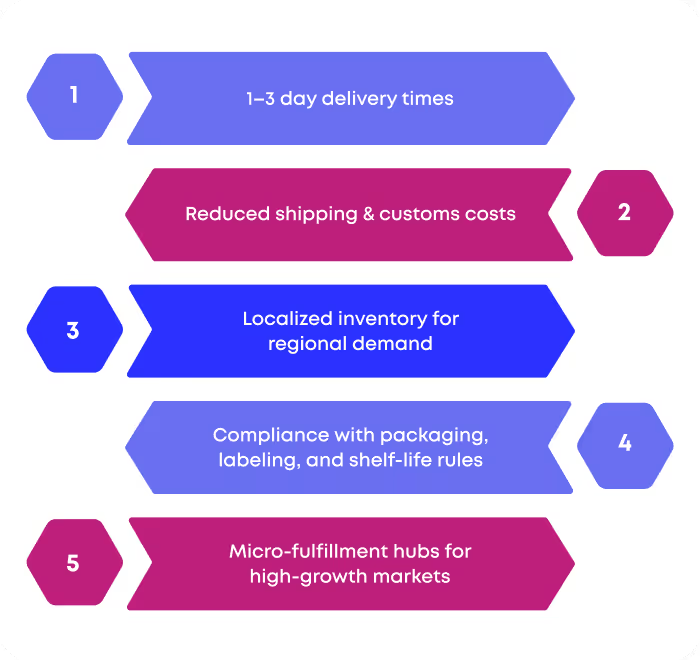
- Faster delivery times (1–3 days instead of 7–21 days)
- Lower cross-border logistics costs
- Reduced customs delays
- Localized inventory for regional demand
- Better compliance with packaging, labeling, shelf-life rules
Why This Matters
McKinsey reports that same-day and next-day delivery expectations have doubled since 2023, especially in high-growth regions. Shoppers don’t discriminate whether inventory is local or imported — they simply want it quickly.
In 2026, brands unable to offer regionalized stock placement will face higher cart abandonment and lower repeat orders.
Supported Service: Filuet’s Regional Warehouse Network
Filuet has established localized operational hubs across Europe, Central Asia, the Middle East, and emerging markets where global brands struggle due to regulatory, language, or shipping challenges. These hubs allow brands to offer “local” shipping experiences even when operating cross-border.
3. Regulatory Complexity Will Shape Cross-Border Operations
The biggest invisible barrier to global commerce isn't distance — it’s regulation. From tax changes to product compliance to sustainability reporting, requirements vary drastically across regions.
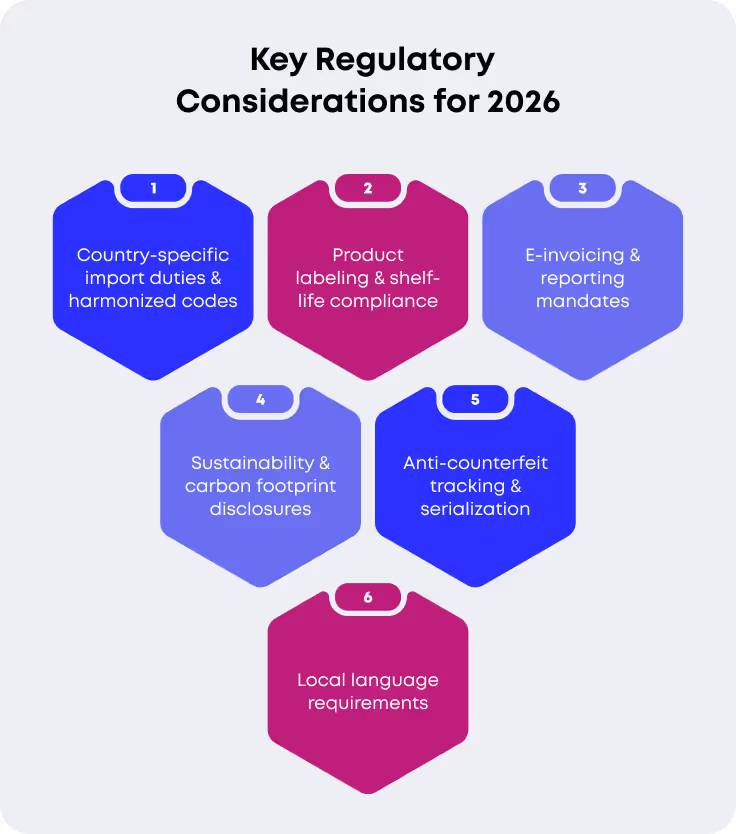
Key Regulatory Considerations for 2026
- Country-specific import duties and harmonized code updates
- Labelling requirements for supplements, cosmetics, and food items
- Local language and shelf-life rules
- E-invoicing mandates across the EU and Asia
- Extended Producer Responsibility (EPR)
- Sustainability disclosures tied to packaging and carbon footprint
- Product serialization and anti-counterfeit tracking requirements
Why This Matters
Regulatory non-compliance is no longer a minor risk. In many markets, penalties include:
- confiscation of shipments
- total return-to-sender
- customer delivery delays
- brand blacklisting
According to OECD reports, 26% of returned cross-border shipments face regulatory issues.
Filuet Case Insight
Filuet’s deep expertise in regulatory navigation is proven through case studies such as the Israel Comprehensive Logistics Solution, where they maintain precise compliance, serialization, and high-volume order accuracy to keep global brands operational in complex markets.
4. AI-Driven Localization & Personalization Will Become the New Normal
AI dosen't just personalize, it makes every global shopper feel local.
Personalization isn’t new, but AI-powered personalization for global shoppers is. In 2026, brands will deploy micro-segmentation and dynamic localization to create experiences that resonate regionally and culturally.
Examples of AI-Powered Localization
- Dynamic currency and language switching
- Personalized product recommendations based on regional buying trends
- Tailored promotions aligned with local events
- Geolocation-based pricing
- Region-specific SKU bundling
- Preference-based auto-replenishment predictions
Why This Matters
AI-driven localization increases conversion by up to 35% (Shopify, 2024). When a shopper in Israel or Kazakhstan sees products priced in their own currency, with local shipping options and familiar promotions, the experience feels native.
Supported Service: Digital Integration & Smart Fulfillment
Filuet’s fulfillment platforms integrate catalog data, inventory availability, and historical purchase trends, enabling brands to deliver smarter localized experiences across multiple markets.
5. Cross-Border Returns Will Become a Critical Differentiator
Returns are one of the most difficult parts of international shopping — and also one of the most influential on customer loyalty.
Key Trends in 2026 Returns Management
- Local drop-off centers & pick-up hubs
- Automated refund processing
- Consolidated cross-border returns shipments
- AI-driven return fraud detection
- Refurbishment & circular returns programs
Why This Matters
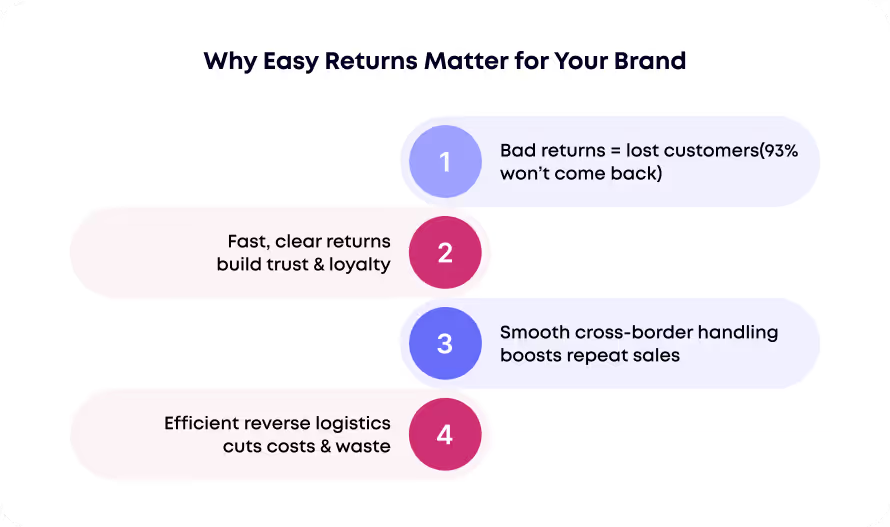
93% of shoppers say they will not buy again after a bad returns experience (Narvar). For cross-border brands, this risk is amplified: delays, customs fees, and lack of clarity can ruin customer satisfaction.
Filuet Case Relevance: Reverse Logistics Optimization
In their Kazakhstan & Central Asia operations, Filuet provides reverse logistics workflows that categorize returns, manage refurbishables, and seamlessly reintegrate items back into inventory, reducing waste and cost for brands.
6. Marketplace Expansion Will Drive New Cross-Border Traffic

Marketplaces like Amazon, Mercado Libre, Wildberries, Noon, and TikTok Shop have democratized global selling. In 2026, more marketplaces will expand internationally, increasing both opportunities and competition.
Key Advantages of Marketplace Selling
- Access to massive localized audiences
- Built-in payment, tax, and logistics infrastructure
- Regional trust and recognition
- Faster go-to-market with minimal setup
- Built-in promotional and advertising engines
Why This Matters
By 2026, marketplaces will make up nearly 60% of global B2C e-commerce, according to Statista. Brands that fail to optimize for marketplace-specific fulfillment and compliance will struggle with customer ratings and visibility.
Filuet's Role
Filuet’s specialized B2C fulfillment systems and marketplace-connect integrations support compliant, fast, and scalable order processing for marketplace sellers in highly regulated regions.
7. Cross-Border Payments Will Become Faster, Cheaper & More Secure

Payments are one of the biggest friction points in cross-border commerce. 2026 will bring innovations that simplify this dramatically.
Emerging Trends
- Real-time cross-border settlements via fintech rails
- Localized BNPL offerings
- Crypto-enabled settlement for B2B payments
- Fraud filtering powered by AI
- Biometrics-based authentication
- Government-backed digital currency pilots
Why This Matters
Deloitte reports that the payment experience influences 54% of consumer trust in cross-border purchases. With faster processing and greater transparency, global conversion rates will rise dramatically.
How Filuet Connects
While Filuet does not process payments directly, their order management integration ensures every paid order flows into compliant pick-pack-ship workflows instantly, without manual intervention.
8. Sustainability Expectations Are Reshaping Cross-Border Fulfillment
Global shoppers now expect brands to operate sustainably — not as a marketing strategy, but as a basic standard.
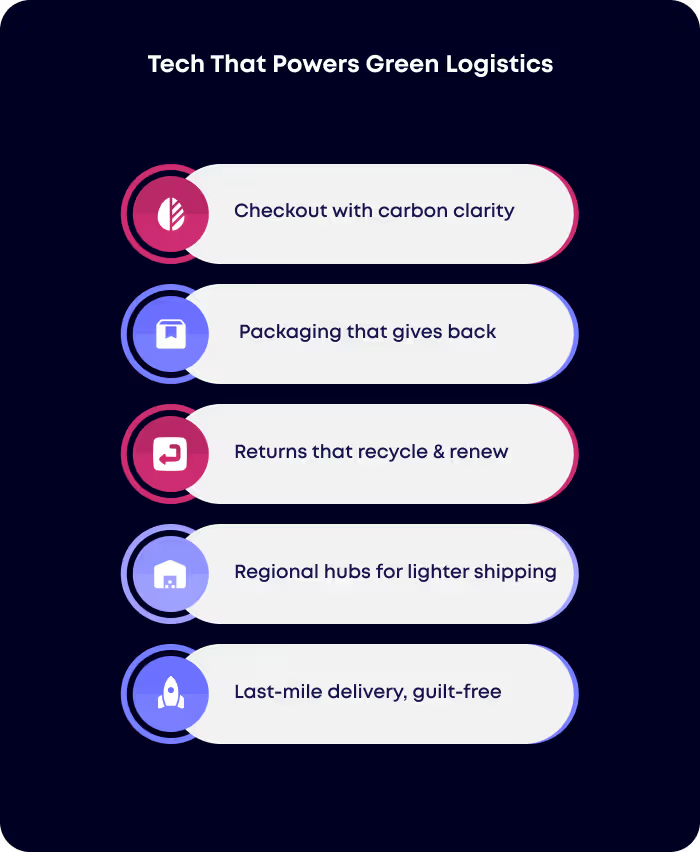
Key Sustainability Trends in 2026
- Carbon-emission transparency at checkout
- Sustainable packaging mandates
- Green last-mile delivery networks
- Recyclable packaging return programs
- Regional manufacturing and micro-fulfillment to reduce air freight
Why This Matters
68% of consumers are willing to pay more for a sustainable delivery option (DHL, 2024). In cross-border contexts, this becomes even more important as customers scrutinize the environmental impact of long-distance shipping.
Supported Service: Filuet’s Waste-Reduction & Efficient Routing
Filuet’s processes reduce unnecessary packaging, optimize route planning, and leverage regional inventory placement — helping global brands meet stricter sustainability standards without higher operational costs.
9. Inventory Visibility & Real-Time Tracking Will Be Non-Negotiable
Cross-border shoppers expect to know exactly where their order is at all times. Real-time tracking is no longer a “nice to have”, it’s a direct contributor to conversion and repeat purchases.
What 2026 Will Standardize
- Real-time warehouse-to-doorstep tracking
- SKU-level stock visibility across multiple regions
- Predictive stockout alerts
- AI-driven inventory forecasting
- Integration with marketplace tracking APIs
- Automated exceptions handling
Why It Matters
Tracking transparency reduces WISMO (“Where is my order?”) cases by up to 70%, dramatically lowering operational costs and increasing trust.
Filuet Case Study

In their Dubai operations, Filuet integrates advanced tracking with real-time inventory systems, allowing brands to provide customers with precise shipping updates — a major competitive advantage in cross-border fulfillment.
10. Fulfillment Automation Will Reshape Speed and Scalability

Robotics, automation, and AI are transforming warehouses worldwide and cross-border hubs are among the first adopters.
Automation Trends for 2026
- Autonomous mobile robots (AMRs)
- Automated sorting systems
- Robotic palletizers
- Predictive workforce planning
- Smart slotting algorithms
Why This Matters
Order volumes fluctuate dramatically in cross-border commerce. Automation ensures speed and accuracy no matter the scale, reducing last-mile delays and errors.
Filuet’s Advantage
Filuet’s new-generation facilities include automated sorting, digital scanning flows, and inventory mobility tools that help global brands maintain precision across thousands of SKUs — especially in regulated categories like wellness products and nutraceuticals.
Conclusion: Filuet Helps Brands Make It Real
Cross-border shoppers in 2026 will expect localized pricing, frictionless checkout, fast delivery, sustainable packaging, simple returns, and full transparency from cart to doorstep. Brands that adapt early will win international market share — those that don’t will struggle as expectations rise.
While this article explored the biggest trends shaping global e-commerce in 2026, one thing is clear: cross-border growth is no longer about shipping products internationally. It’s about building global-ready operations.
That is where partners like Filuet become essential.
With decades of regional expertise, localized fulfillment infrastructure, regulatory knowledge, and advanced digital systems, Filuet helps global brands navigate cross-border complexities and deliver seamless experiences to customers across the Middle East, Europe, and Central Asia.
Filuet does not just move products — it enables brands to grow confidently in markets that were previously too complex or costly to reach.
As cross-border commerce evolves, the brands that succeed will be those who leverage smart logistics partners and modern operational strategies. The global customer is ready — and with the right infrastructure, your business will be too.


.avif)