.webp)
Introduction
In global e-commerce, the last mile has always been the most unpredictable, expensive, and emotionally charged stage of fulfillment. It is the moment when weeks of brand-building, supply chain planning, and operational execution culminate in a single knock on the customer’s door. And in 2025, this final step has become the defining factor for customer satisfaction, loyalty, and long-term revenue stability.
A decade ago, last-mile delivery was evaluated on one metric: speed. Today, consumer expectations have evolved dramatically. Shoppers want speed, precision, transparency, real human support, green delivery options, and effortless returns. They also judge brands on how “caring” and “reliable” the last-mile experience feels — turning delivery into a powerful extension of brand identity.
This article breaks down why the last mile now determines customer happiness, the technological and operational forces reshaping delivery outcomes, and how global retailers are preparing their last-mile strategies for 2025 and beyond.
1. The New Consumer Standard: Instant, Predictable, and Human-Centric Delivery
Why the Last Mile Matters More Than Ever
Modern shoppers bring extremely high expectations shaped by e-commerce giants — and they now apply those expectations to every brand.
According to a 2025 report from Metapack, 90% of consumers say the delivery experience directly influences their decision to reorder
Similarly, Salesforce research shows that 73% of customers expect companies to understand their needs during fulfillment, not only during shopping.
The Emotional Factor
Delivery is often the most emotional moment in the entire purchase journey. When a package is delayed, it doesn’t just feel like a logistics issue, it can feel like a broken promise, a lack of respect for the customer’s time, or a signal that the brand isn’t as reliable as it appeared online. In some cases, that frustration alone is enough to push a customer to try a competitor next time.
On the other hand, when delivery happens smoothly and exactly as expected, it creates a quiet but powerful sense of trust. Even without direct interaction, a seamless delivery can feel like the brand genuinely went the extra mile, leaving a lasting positive impression.
Key Advantages of Strong Last-Mile Operations
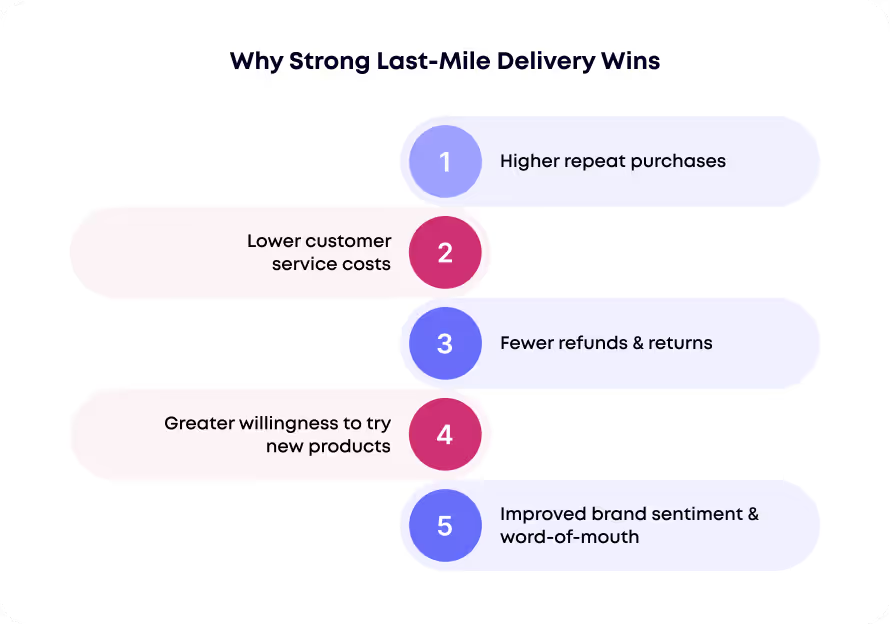
Strong last-mile operations create measurable benefits that extend beyond delivery performance. When orders arrive accurately and on time, customers are more likely to return, driving higher repeat purchase rates. Clear communication and reliable execution also reduce the volume of customer service inquiries, lowering support costs. Fewer delivery-related issues translate into reduced refund and return requests, while consistent positive experiences increase customer confidence to try new product lines. Over time, dependable last-mile performance strengthens brand sentiment and encourages organic word-of-mouth, amplifying long-term growth.
In other words, the last mile is not merely a logistics function, it’s a strategic customer experience engine.
2. Speed Is Still King - But Precision Is the Real Differentiator in 2025
The Shift From Fast to Accurate
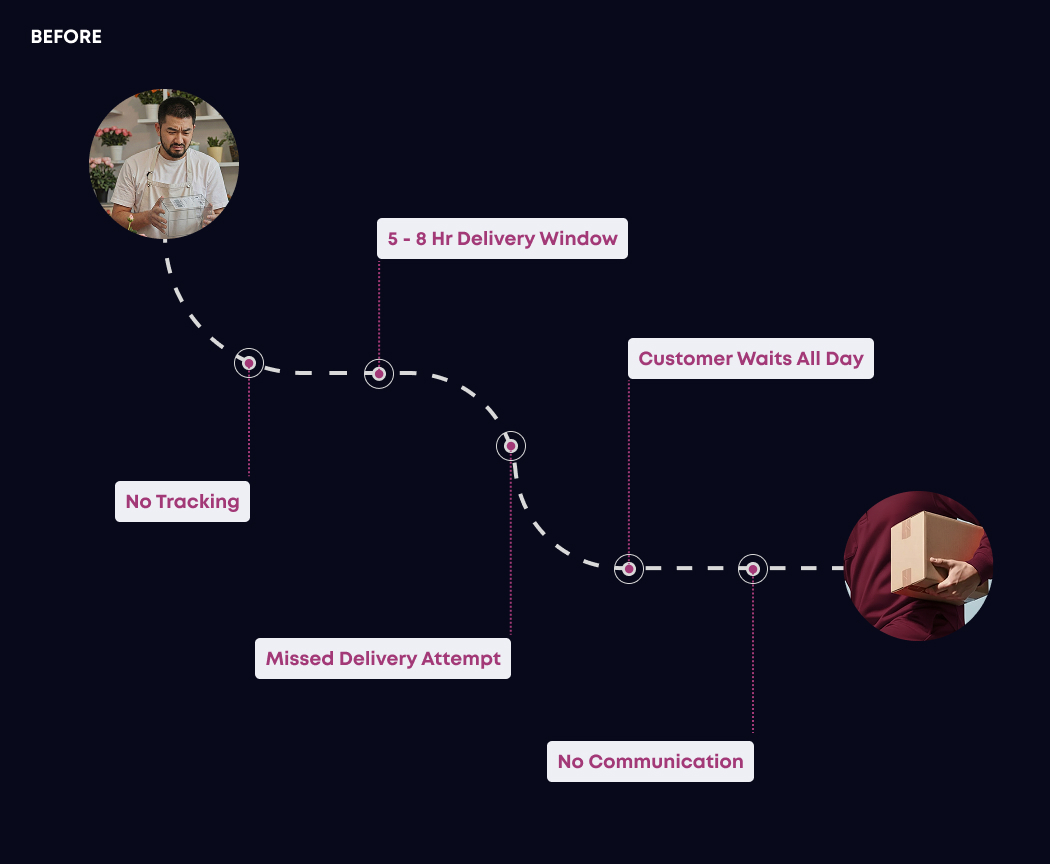
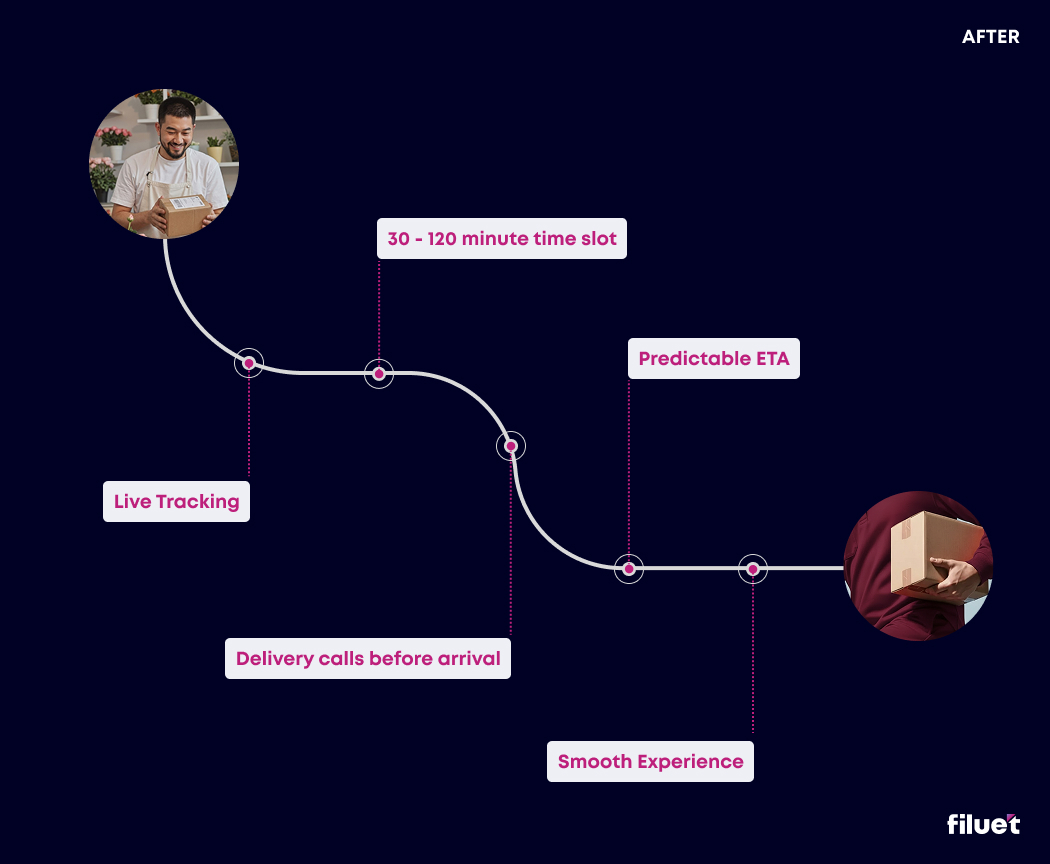
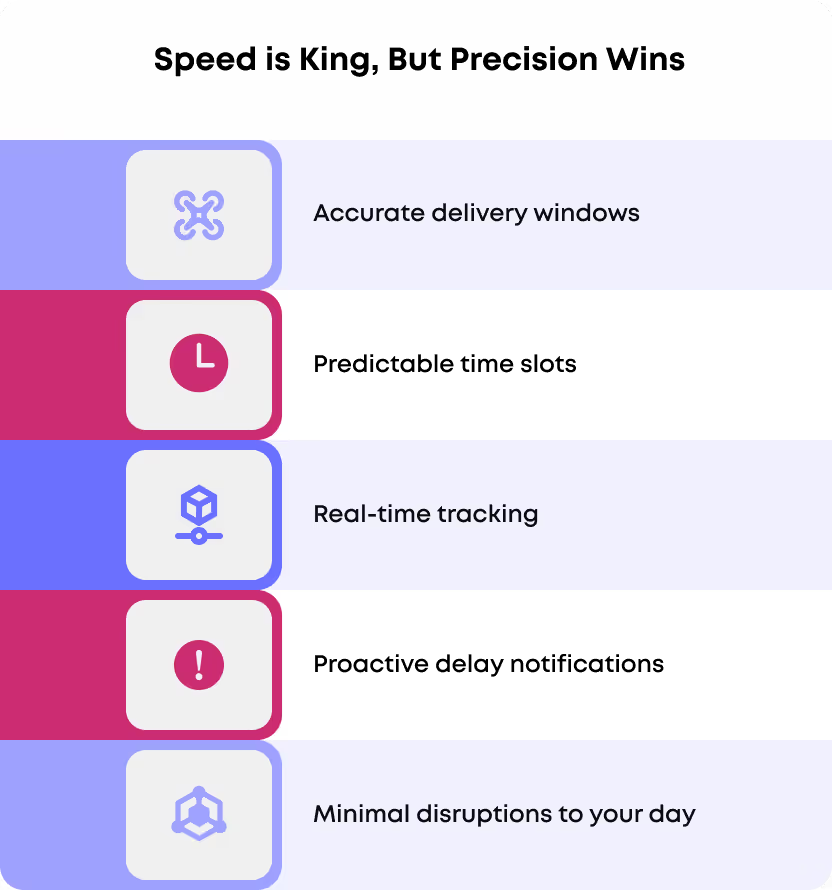
While next-day and same-day delivery continue to matter, the true differentiator in 2025 is precision rather than sheer speed. Consumers increasingly value accurate delivery windows that align with their schedules, supported by real-time tracking and proactive notifications when delays occur. Predictable time slots reduce uncertainty and help customers plan their day with confidence, while fewer unexpected disruptions create a smoother overall experience. As a result, accuracy in last-mile execution is becoming a stronger driver of satisfaction and loyalty than speed alone.
McKinsey reports that 74% of online shoppers value accurate delivery time estimates more than ultra-fast delivery.
Predictive Delivery Windows
Brands are increasingly using predictive analytics to narrow delivery windows from broad 24-hour ranges to precise time frames as short as 30 to 120 minutes. This level of predictability reduces failed delivery attempts by ensuring customers are available at the right time, lowers frustration caused by missed handoffs, and improves driver efficiency by minimizing wait times and route deviations. For customers, tighter delivery windows also simplify daily planning, turning delivery from a disruption into a predictable part of their schedule.
Why It Matters for Global Brands
Predictability becomes even more critical for global brands operating across borders, where delivery complexity is amplified by customs processing, multiple carrier handoffs, time zone differences, and inconsistent local transportation infrastructure. In these environments, uncertainty quickly erodes trust. Brands that consistently deliver with precise, reliable delivery windows stand out by offering a smoother experience despite these challenges, earning disproportionate customer loyalty in cross-border markets.

Customers value accuracy more than speed.
Reduces anxiety and WISMO queries.
ETA changes and delay notifications.
Helps customers plan their day.
Polite, respectful, human interactions matter.
3. Delivery Transparency: The Hidden Engine of Customer Trust
The Rise of Real-Time Visibility
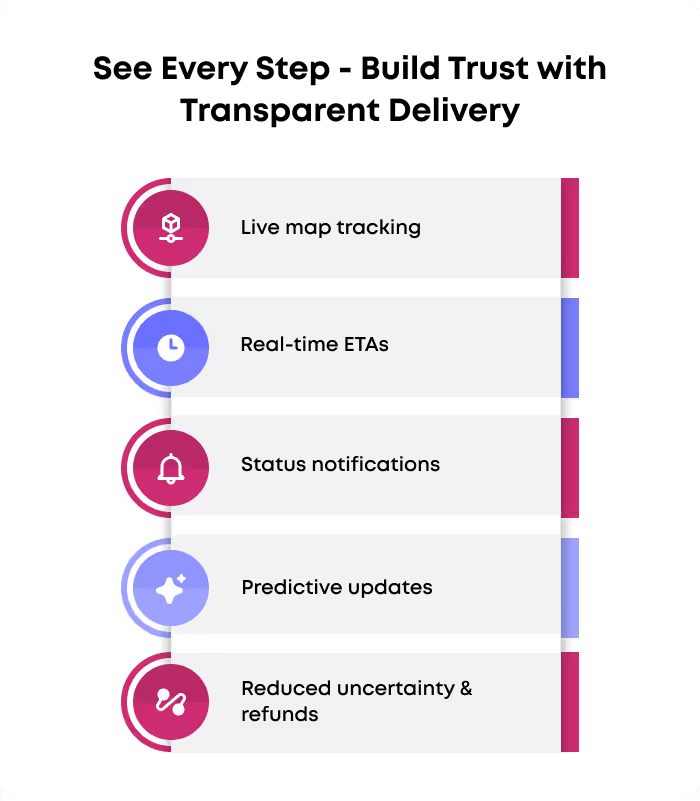
Customers increasingly demand live map tracking, status notifications, and ETA updates, driven by apps like Uber, Amazon, and food delivery platforms.
According to Route’s 2024 Consumer Report:
- 80% of shoppers feel anxious when they cannot track their order, and
- 9 in 10 consumers prefer brands offering live delivery updates
What Transparency Actually Solves
Transparency in the last mile directly addresses many of the frustrations customers experience during delivery. When shoppers have clear, real-time visibility into their orders, uncertainty is reduced, which significantly lowers “Where Is My Order?” (WISMO) inquiries. Clear delivery updates also prevent premature refund requests driven by confusion rather than actual service failures. In addition, transparent communication helps minimize negative reviews that often stem from perceived delays rather than true delivery issues, protecting brand reputation.
Data That Powers Transparency
Delivering this level of visibility depends on accurate, real-time data flowing across systems. GPS tracking and driver behavior monitoring provide live location and status updates, while carrier API integrations ensure consistent information across platforms. Predictive ETAs refine delivery expectations by adjusting timelines dynamically, and geofencing notifications trigger timely alerts as shipments approach key delivery milestones. Together, these data sources transform last-mile delivery from a black box into a predictable, customer-friendly experience.
Why It Matters
The last mile is ultimately a communication challenge as much as a logistics one. Transparency replaces uncertainty with reassurance, strengthening trust and improving the overall delivery experience.
4. Humanizing the Last Mile: The Need for Friendlier, Supportive Delivery Experiences
Why Human-Like Delivery Now Matters
Even in an age of automation, consumers value warmth, respect, and helpfulness in the final handoff.
Capgemini found that customer satisfaction scores increase by up to 30% when delivery staff exhibit positive interpersonal behavior.
Elements of a “Friendlier” Delivery
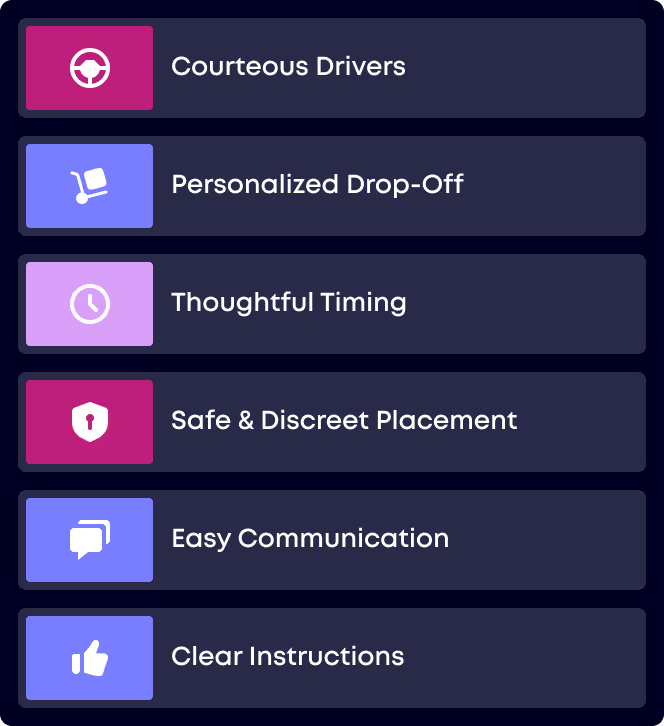
A friendlier delivery experience is defined by human-centered details that make interactions feel effortless and respectful. Courteous drivers set the tone by representing the brand professionally at the doorstep, while easy communication through familiar channels such as SMS or WhatsApp allows customers to stay informed without friction. Personalized drop-off preferences and clear delivery instructions help ensure packages are left exactly where customers expect them, reducing confusion or missed deliveries. When issues do arise, simple and fast problem resolution—combined with flexible scheduling options—creates a sense of reliability and care rather than inconvenience.
Micro-Moments That Influence Loyalty
Customer loyalty is often shaped by small, often overlooked moments during the delivery experience. A driver waiting an extra minute instead of leaving prematurely, or proactively sending delivery updates before the customer needs to ask, can significantly improve perception. Respecting building rules or neighborhood policies and placing packages safely and discreetly also signal professionalism and trust. While each of these actions may seem minor in isolation, together they accumulate into meaningful impressions that influence repeat purchasing behavior and long-term brand loyalty.
5. The Next Frontier: Sustainable and Cost-Efficient Last-Mile Delivery
Why Sustainability Is Becoming a Delivery Expectation
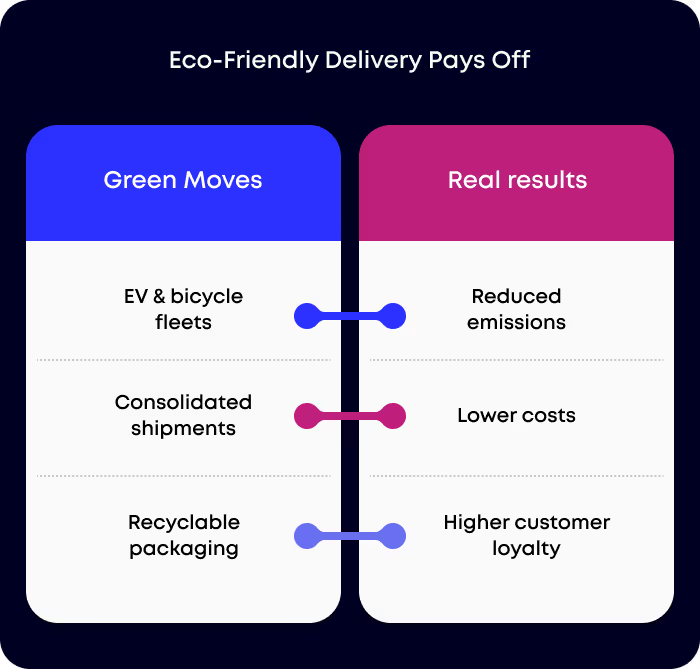
Sustainability has rapidly shifted from a brand value add-on to a baseline delivery expectation. According to Deloitte, more than 60% of customers globally now prefer brands that offer environmentally responsible delivery options. Customers increasingly associate delivery quality not only with speed and accuracy but also with environmental impact. Expectations now include the use of electric or bicycle-based deliveries in urban areas, consolidated shipments that reduce redundant trips, carbon-neutral shipping options, recyclable packaging, and measurable efforts to reduce delivery emissions. Brands that fail to address these expectations risk appearing outdated or misaligned with evolving consumer values.
Operational Benefits of Greener Delivery
Beyond customer perception, sustainable last-mile practices often deliver tangible operational advantages. Reduced reliance on fuel-intensive delivery methods lowers transportation costs, while improved route optimization decreases mileage and idle time. Greener delivery strategies also lead to fewer failed delivery attempts through better planning and consolidated routes. In many cases, smaller and more agile delivery vehicles result in lower maintenance costs and greater efficiency in dense urban environments.
Emerging Green Delivery Trends for 2025
Looking ahead, green delivery is being driven by a combination of technology and infrastructure innovation. Electric vehicle fleets are becoming standard for urban delivery zones, supported by micro-fulfillment centers positioned closer to end customers. Urban lockers and pickup points reduce repeated delivery attempts, while AI-driven route optimization minimizes emissions by selecting the most efficient paths. In some cities, night-time eco deliveries are also emerging, taking advantage of reduced congestion to lower fuel consumption and environmental impact.
Why It Matters
Sustainability in last-mile delivery is no longer optional. It has become a competitive differentiator that directly influences brand preference, customer loyalty, and long-term growth. Brands that invest early in sustainable delivery models are increasingly rewarded by customers who value both convenience and environmental responsibility.
6. Returns, Reverse Logistics & the “Second Last Mile”

The Returns Experience Is Now Part of the Delivery Experience
The last-mile journey doesn’t end with the outbound delivery, it extends into reverse logistics.
According to UPS, 73% of customers say a difficult return process prevents them from purchasing again.
What Customers Expect in 2025 Returns
By 2025, customer expectations around returns are defined by speed, convenience, and transparency. Shoppers increasingly expect prepaid return options that remove friction and eliminate upfront costs, along with mobile QR code–based returns that simplify the process at drop-off points. Package-free return options are gaining popularity as they reduce effort and waste, while clear refund timelines help set realistic expectations and build trust. Real-time return tracking and easy pickup scheduling further enhance the experience by giving customers visibility and control throughout the return journey.
Why Reverse Logistics Matters Operationally
From an operational standpoint, efficient reverse logistics systems play a critical role in maintaining fulfillment accuracy and cost control. Faster return processing enables brands to recover sellable inventory more quickly, reducing warehouse congestion and preventing backlog buildup. Streamlined workflows also improve the resale or refurbishment value of returned items by minimizing handling delays. At the same time, clear and predictable return processes reduce inbound customer service inquiries, allowing teams to focus on higher-value tasks.
The “Last-Mile Loop” Strategy
Many brands are now treating outbound delivery and returns as a single, continuous operational loop rather than separate processes. This “last-mile loop” approach ensures that fast outbound deliveries are matched with equally smooth inbound return flows, preventing bottlenecks on either side. By designing systems that connect delivery execution, return intake, and refund processing into one transparent lifecycle, companies can create a more consistent customer experience while maintaining tighter operational control.
This holistic view drastically improves customer satisfaction.
7. Technology That Powers the Future of Last-Mile Experience
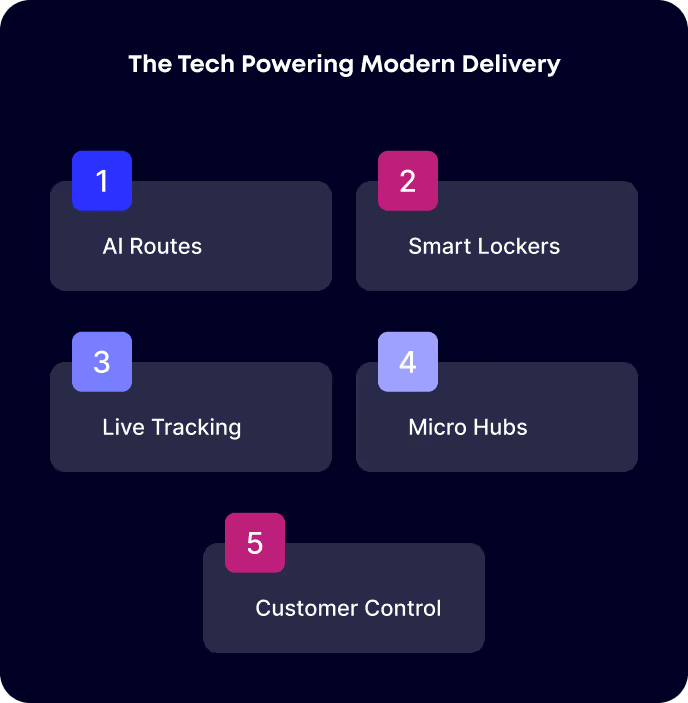
1. AI-Powered Route Optimization
AI-driven routing systems continuously analyze live traffic conditions, weather disruptions, driver performance, and delivery density to determine the most efficient paths in real time. By dynamically adjusting routes throughout the day, these systems reduce delays, lower fuel consumption, and improve on-time delivery performance, especially in high-volume urban environments.
2. Crowdsourced Delivery Networks
Crowdsourced delivery platforms expand last-mile capacity by tapping into flexible, gig-based fleets. Solutions such as on-demand courier networks enable same-day and short-notice deliveries without the fixed cost of maintaining large in-house fleets, making them particularly effective for handling peak demand and dense metropolitan coverage.
3. Delivery Lockers & Click-and-Collect
The adoption of delivery lockers and click-and-collect models continues to grow as they solve many common last-mile challenges. These options increase first-attempt delivery success, reduce driver mileage, and lower the risk of package damage or failed handoffs. They also offer customers greater flexibility in when and where they collect their orders.
4. Real-Time Scanning & Geo-Tagging
Advanced scanning and geo-tagging technologies provide precise, real-time visibility into shipment movement and delivery confirmation. Each scan validates location, time, and delivery status, creating a reliable proof-of-delivery record while reducing disputes and improving operational accountability.
5. Micro-Fulfillment Centers (MFCs)
Micro-fulfillment centers located closer to end customers significantly reduce last-mile distances and delivery times. By positioning inventory within high-demand urban zones, MFCs help brands meet faster delivery expectations while easing pressure on centralized warehouses and long-haul transport networks.
6. Predictive Problem Resolution
Predictive analytics enables last-mile systems to detect potential delivery failures, such as route congestion, capacity shortages, or address-related issues, before they occur. This allows operators to proactively reroute shipments, adjust schedules, or notify customers in advance, reducing service disruptions and dissatisfaction.
7. Customer-Controlled Delivery Options
Modern delivery platforms increasingly give customers direct control over their delivery experience. Features such as flexible time-slot changes, redirection to pickup points, and options for doorstep or concierge delivery allow recipients to choose what works best for them, improving satisfaction while reducing failed delivery attempts.
Conclusion: The Last Mile Is Becoming the Heart of Global E-Commerce Satisfaction
By 2025, the last-mile experience has moved far beyond being a back-end logistics function and has become a decisive touchpoint in the customer journey. It is often the first physical interaction a customer has with a brand, shaping initial perceptions and setting expectations for reliability and quality. A smooth, transparent delivery experience builds trust, while delays or errors can quickly erode confidence.
Consumers today expect speed, precision, transparency, convenience, friendliness, and sustainability, all packaged into one seamless experience. Brands that master these elements will outperform competitors not because of the lowest price, but because they deliver a superior last-mile journey.
For companies operating across continents, these expectations are even more complex, requiring localized knowledge, strong carrier partnerships, smart technology, and optimized regional logistics networks. This is why fulfillment partners with deep regional experience and proven last-mile operational infrastructure play such a crucial role.
For example, Filuet’s global case studies, including its omnichannel expansion projects, regional distribution hubs, and specialized last-mile programs for international brands — show how well-designed fulfillment ecosystems can dramatically improve delivery predictability, customer satisfaction, and operational efficiency.
Case Studies: https://www.filuet.com/case-studies
Ultimately, the brands that win in 2025 will be those that understand a simple truth:
The last mile is not just about delivering a package, it’s about delivering confidence, care, and a reason for customers to return.