.webp)

Introduction
Global fulfillment networks are becoming more complex than ever. Brands today operate across multiple markets, sell through varied digital channels, and must meet customer expectations for perfect accuracy, fast delivery, and seamless order experiences every single time. A single inventory error, stockout, or inaccurate demand estimate can ripple across supply chains, resulting in delayed shipments, financial losses, and dissatisfied customers.
Traditional approaches to forecasting and order accuracy—built on manual processes, static spreadsheets, and backward-looking estimates—are no longer sufficient in a world defined by real-time consumer behavior and volatile global demand. This is why leading supply chain operators are shifting toward predictive analytics, a data-driven method that anticipates future operational outcomes and enables higher fulfillment precision.
This blog explores how predictive analytics is transforming global fulfillment accuracy, with deep operational insights into forecasting, accuracy improvement, warehouse planning, inventory models, labor optimization, and risk prevention. Drawing from industry research, real-world case studies, and cross-border fulfillment challenges, this article breaks down what supply chain leaders need to know as predictive systems become the new backbone of global logistics.
1. The Shift From Reactive to Predictive Fulfillment Operations
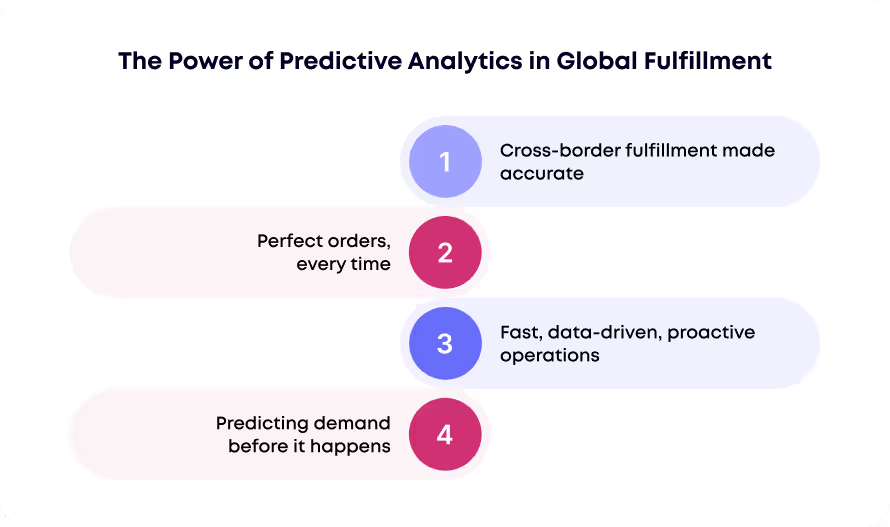
For years, many fulfillment networks operated on reactive principles: forecast when a problem appears, adjust when performance drops, and fix accuracy issues after customers complain. However, reactive models lead to chronic inefficiencies, especially in busy multi-market operations. Modern fulfillment accuracy requires moving from “tracking what happened” to “anticipating what will happen next.”
Why Predictive Analytics Matters
Predictive analytics leverages machine learning, historical datasets, real-time signals, and pattern recognition to forecast outcomes before they occur. This makes fulfillment systems proactive rather than reactive.
According to McKinsey, companies using predictive analytics in supply chain operations reduce forecasting errors by up to 50% and improve service levels by up to 65%.
In fulfillment, predictive models enable organizations to:
- Identify SKU-level demand patterns
- Detect anomalies before they impact accuracy
- Improve slotting and storage logic
- Optimize staff planning
- Reduce mis-picks and packing errors
- Prevent stockouts and overstocks
- Improve order accuracy metrics (such as OTIF and DIFOT)
The industry shift is clear: accuracy is no longer something to inspect after an order is shipped, it's engineered into operations ahead of time through data.
Key Advantage
Predictive analytics makes fulfillment more precise, stable, and resilient, especially during demand volatility, product launches, seasonal peaks, and rapid cross-border expansion.
2. Predictive Demand Forecasting: The Foundation of Fulfillment Accuracy
Forecasting is at the heart of every global fulfillment system. Accurate forecasting ensures the right stock is available at the right time and in the right location. Historically, forecasting was based on single-variable methods that struggled with multi-regional complexity. Predictive analytics introduces multi-variable, machine-learning-driven forecasting that improves precision significantly.
Operational Deep Dive: What Predictive Forecasting Tracks
Predictive models evaluate dozens of data sources, including:
- Order history : Analyzing past purchase patterns helps brands understand repeat buying cycles, popular SKUs, and customer lifetime value. It also reveals how often shoppers reorder and which products drive long-term retention.
- Geographic consumption behavior : Different regions show different buying habits, preferred product categories, and delivery expectations. Tracking this helps businesses localize inventory, pricing, and promotions more effectively.
- Seasonal trends : Demand often shifts around holidays, weather changes, or industry-specific cycles. Identifying these patterns helps companies forecast inventory needs and avoid stockouts or overstocks.
- Marketing campaigns : Promotions, discounts, and influencer pushes often cause spikes or dips in demand. Understanding the impact of each campaign helps refine future strategies and allocate budgets more efficiently.
- Social media activity : Mentions, trends, and viral content can rapidly influence product demand. Monitoring social platforms gives early signals of rising interest or potential drops in relevance.
- Currency fluctuations : Exchange rate changes directly affect cross-border pricing, consumer willingness to purchase, and margins. Tracking these movements allows brands to adjust pricing dynamically.
- Economic indicators : Broad economic conditions, like inflation, employment rates, or consumer sentiment, shape purchasing power. These indicators help forecast demand shifts across markets.
- Cross-border lead times : Transit times often vary by destination, customs processing, and logistics partners. Understanding these helps businesses set accurate delivery promises and plan safety stock.
- Supplier performance timelines : Evaluating how reliably suppliers meet production and shipping deadlines ensures smoother forecasting. Delays or inconsistencies can directly impact inventory planning.
- Returns history : High return rates on certain SKUs can signal product issues, sizing problems, or mismatched customer expectations. This data helps refine product quality and forecast net demand more accurately.
- SKU affinity analysis: Identifying which products are frequently purchased together helps optimize bundling, recommendations, and warehouse placement. It also enables more accurate forecasting for related items.
Modern forecasting tools incorporate external signals, such as weather, public holidays, or consumer sentiment, allowing operators to prepare for fluctuations earlier.
Why It Matters
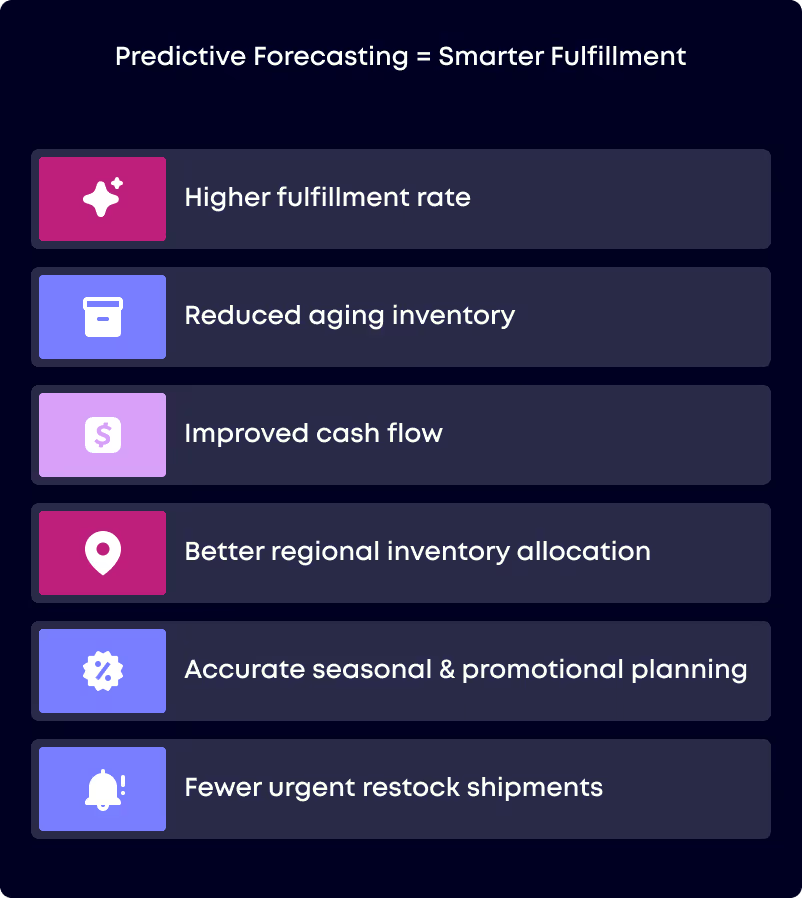
Accurate forecasting reduces the mismatch between supply and demand. A study by Gartner found that companies using predictive demand forecasting improve inventory turnover by 20–30%.
Case Study Relevance
Filuet’s cross-border cosmetic and wellness brand case studies highlight how improved regional forecasting reduced inventory imbalances across Central Asia—leading to optimized lead times and significantly improved order accuracy.
Source: https://www.filuet.com/case-studies
3. Improving SKU-Level Accuracy With Predictive Inventory Models
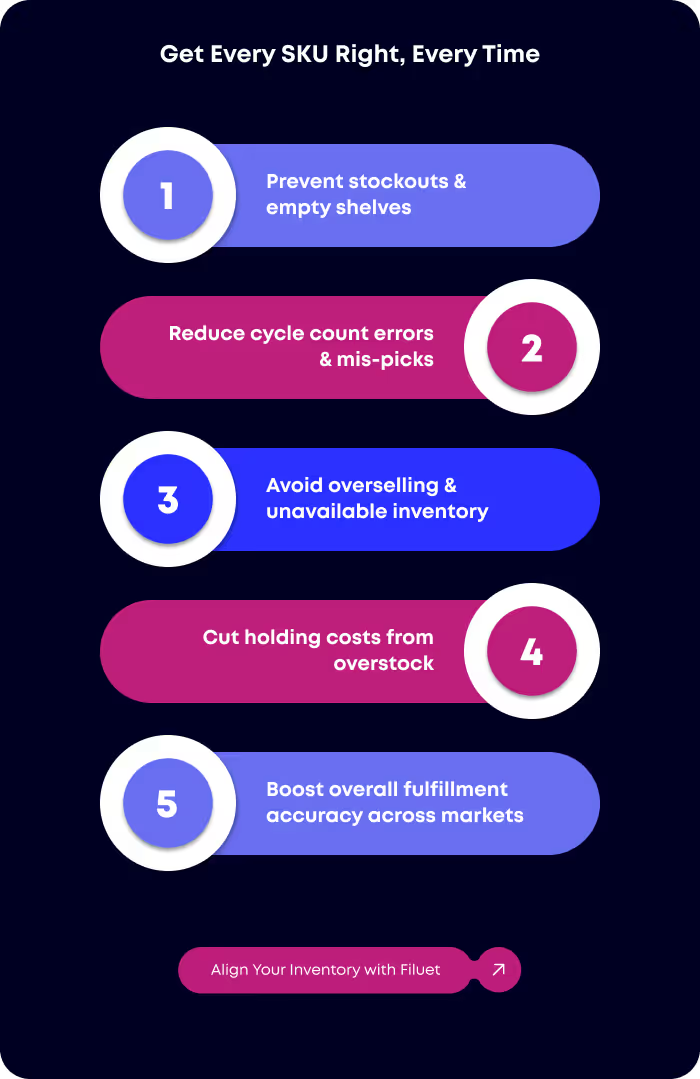
Inventory accuracy is one of the most critical metrics in global fulfillment. A small misalignment, just a few units can disrupt stock availability, increase customer dissatisfaction, and create labor inefficiencies in the warehouse. Predictive inventory models enable real-time alignment between physical inventory and system inventory.
How Predictive Inventory Modeling Works
Predictive inventory modeling works by analyzing SKU performance, operational signals, and supplier behavior to anticipate where inaccuracies may arise. These models identify which products are at risk of stockouts, which items may become slow-moving or obsolete, and the optimal timing for reorders to keep inventory levels accurate. They also calculate region-specific safety stock needs and highlight SKUs that frequently show cycle count mismatches.
By examining patterns in shrinkage, discrepancies, and supplier delays, the system can pinpoint root causes of inventory issues before they escalate. To achieve this level of accuracy, predictive models combine data from RFID scans, WMS activity logs, cycle count results, and SKU velocity trends, creating a comprehensive picture of where errors are most likely to occur and how to address them proactively.
Why It Matters
If the system says a product is available but the warehouse shelf is empty, fulfillment accuracy collapses instantly. Predictive analytics ensures tighter alignment.
According to SupplyChainDive, inventory discrepancies account for over 30% of fulfillment errors in multi-market ecommerce operations.
Predictive inventory analytics reduces:
- Cycle count errors
- Order picking mistakes
- Overselling
- Unavailable inventory during peak periods
- Holding costs from overstock
4. Predictive Slotting & Warehouse Layout Optimization
Slotting - deciding where each SKU should be placed inside a warehouse—is essential for efficient picking and packing operations. Traditional slotting is static: high-velocity SKUs go upfront, low-velocity SKUs in the back. But consumer behavior and demand patterns shift constantly.
Predictive slotting uses data to optimize placement dynamically.
How Predictive Slotting Works
Predictive slotting works by analyzing a combination of SKU-level behaviors and operational movement patterns to determine the most efficient placement of products in the warehouse. Models assess SKU velocity trends to identify fast- and slow-moving items, while order affinity data reveals which products are frequently purchased together and should be stored in proximity. Weight, dimensions, and handling requirements are factored in to ensure ergonomic placement and safe movement.
Seasonal peaks and inventory turnover cycles help forecast when certain items will require more accessible locations. At the same time, labor movement patterns, picker routes, and real-time order density per SKU provide a detailed view of how staff navigate the warehouse during different demand periods. Using these insights, the system generates an optimized slotting map,updated weekly or even daily, to continually align product placement with the latest order behavior and operational conditions.
Why It Matters
Better slotting improves picking accuracy, reduces travel time, and enhances worker productivity.
According to Modern Materials Handling, slotting optimization can improve pick accuracy by 20% and reduce labor travel time by up to 50%.
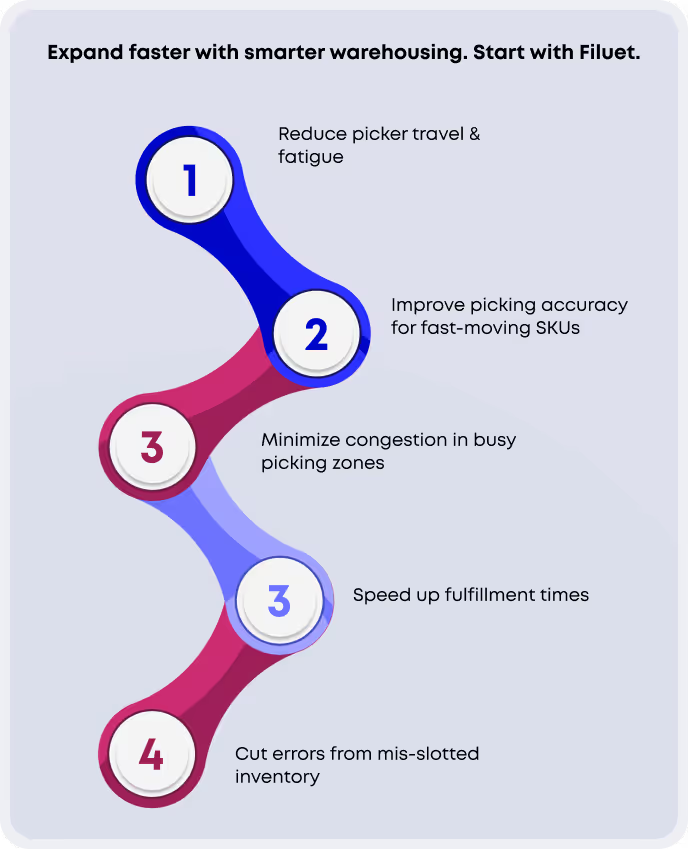
Operational benefits include:
- Higher accuracy for fast-moving SKUs
- Reduced congestion in picking zones
- Lower picking fatigue
- Faster fulfillment times
- Reduced errors from mis-slotted SKUs
5. Predictive Picking Accuracy: Reducing Mis-Picks and Order Errors
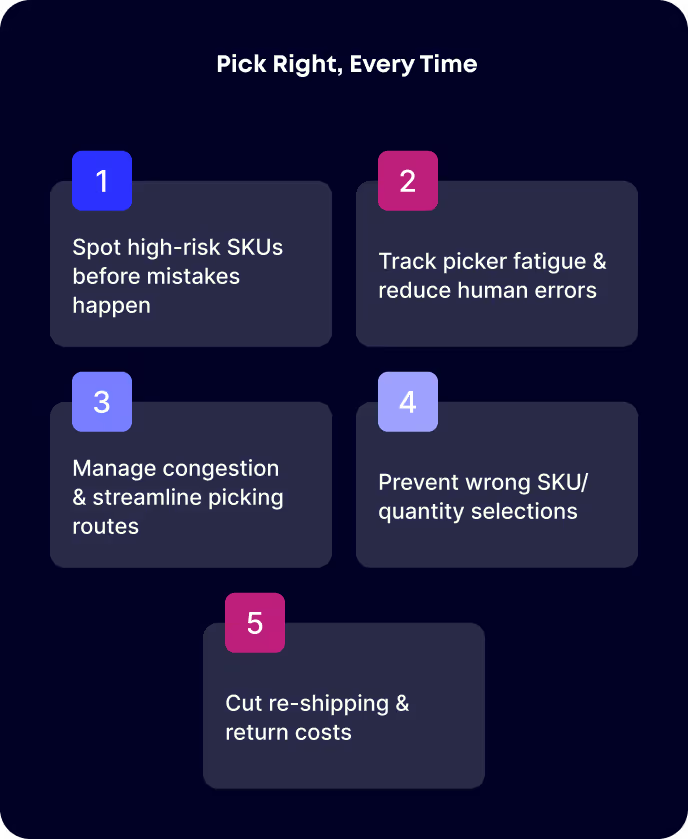
Mis-picks are one of the most common causes of fulfillment inaccuracy. They occur when the wrong SKU, quantity, or variant is picked, often due to human error, poor labeling, suboptimal slotting, or congestion. Predictive analytics helps identify operational conditions that increase the probability of errors.
Key Predictive Inputs for Mis-Pick Prevention
Predictive systems identify mis-pick risks by evaluating a range of operational and environmental variables that influence picking accuracy. These models consider picker fatigue levels based on shift duration, SKU look-alike similarity that may cause visual confusion, and lighting conditions in specific aisles that affect visibility. They also account for congestion patterns during peak periods, barcode scan failure rates, and the training levels of individual staff members.
Additional inputs, such as high-risk SKU zones and the overall complexity of picking routes, help the system understand where errors are more likely to occur. By analyzing historical activity logs, WMS data, and scanner timestamps, the model builds a probability profile that pinpoints the areas and conditions under which mis-picks are most likely, enabling teams to intervene before errors happen.
Why It Matters
A mis-pick is not just an error—it triggers cascading inefficiencies:
- Re-shipping costs
- Returns handling
- Delayed orders
- Customer dissatisfaction
- Increased workload for customer support
- Reconciliation work on the floor
According to Logistics Management, mis-picks cost ecommerce fulfillment centers an average of $50–$70 per error, factoring handling and customer impact. Predictive picking accuracy ensures operations stay clean, error-free, and scalable even during peak seasons.
Case Study Relevance (Filuet)
Filuet's multichannel operations highlight the importance of accurate batch picking and high-volume order management for wellness brands with diverse SKUs. Predictive tools would reduce risk in high-SKU environments.
6. Predictive Labor & Resource Planning for Higher Order Accuracy
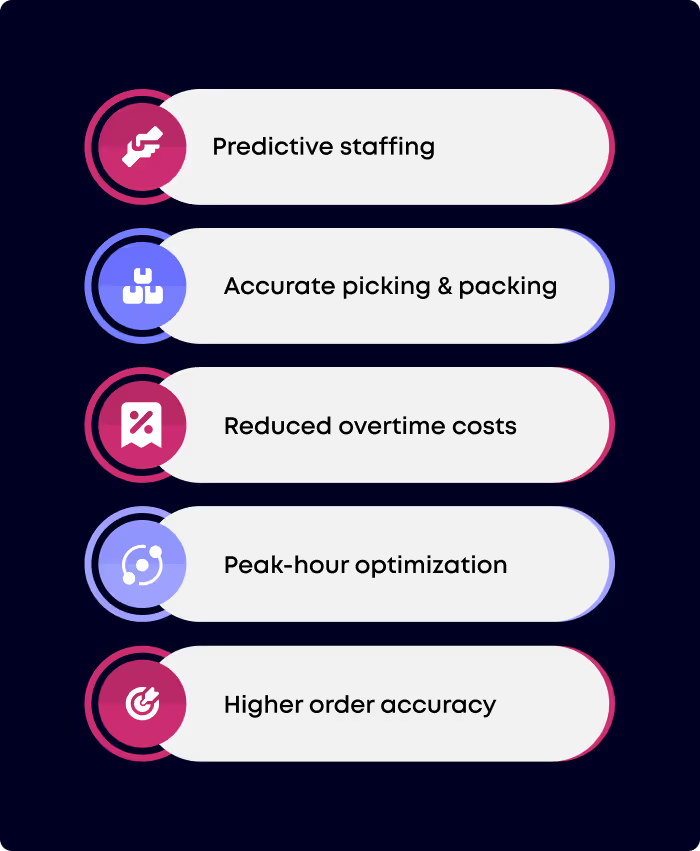
Labor planning is one of the most challenging aspects of fulfillment operations during rapid growth or fluctuating demand. Without enough workers, accuracy drops. With too many, costs rise unnecessarily. Predictive analytics enables better alignment between labor supply and order volume.
How Predictive Labor Forecasting Works
Predictive workforce planning relies on a wide set of inputs to anticipate labor needs across fulfillment operations. These models analyze historical labor productivity, hour-by-hour order volume patterns, and seasonal fluctuations to understand workload variations. They also incorporate the impact of marketing activities, such as product launches or promotional spikes, along with cross-border lead-time disruptions and region-specific shipment cycles that influence daily throughput.
Operational factors like new SKU introductions, expected returns volume, staffing turnover, and training cycles further refine the forecast by revealing how resource availability and task complexity may shift over time. By processing these datasets together, predictive systems generate accurate labor requirement forecasts for every fulfillment function, including receiving, putaway, picking, packing, quality assurance, dispatch, and returns handling.
Why It Matters
Labor directly affects accuracy. Overworked pickers make more mistakes; under-resourced packing stations create bottlenecks.
Research by Accenture found that fulfillment centers using predictive labor forecasting reduce error rates by up to 30%.
Operational benefits include:
- More accurate staffing for peak hours
- Reduced overtime costs
- Higher worker satisfaction
- Improved output consistency
- More accurate picking and packing
- Faster problem identification during peak loads
7. Predictive Returns Analysis: Preventing Inaccuracy Before It Starts
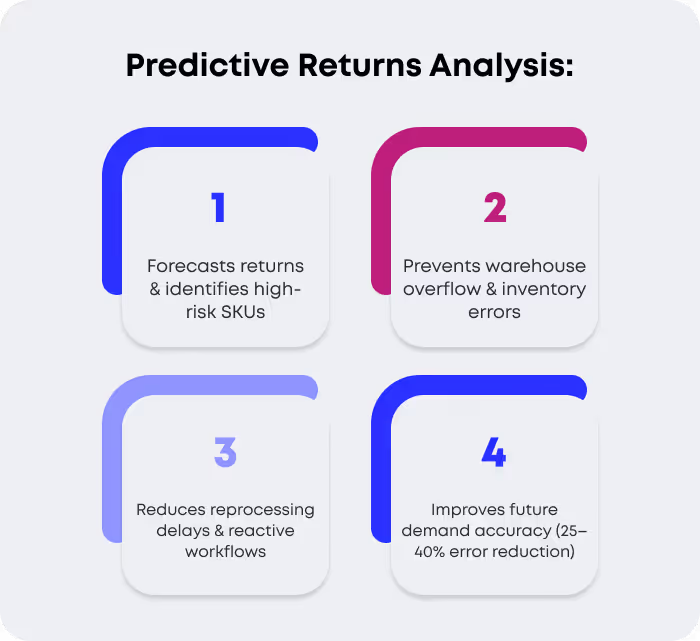
Returns are a major source of fulfillment inefficiency and data noise. Unpredictable returns patterns disrupt inventory accuracy, create reprocessing bottlenecks, and make forecasting unreliable. Predictive analytics makes returns more manageable.
How Predictive Returns Forecasting Works
Predictive returns forecasting works by analyzing a range of variables that influence why and how often customers send items back. Models evaluate SKU-level return rates, product defect probabilities, and regional return behaviors to understand which items or markets pose higher risk. They also factor in return window patterns, seasonal fluctuations, and original order accuracy to identify whether issues stem from product quality, fulfillment errors, or customer expectations.
In addition, data from the shipment journey—such as carrier performance, transit damages, and packaging quality—helps pinpoint where operational failures may occur. Customer lifetime value segments further refine forecasts by showing differences in return behavior across shopper groups. Together, these insights not only predict future return volumes but also highlight underlying operational weaknesses, such as SKUs with high damage rates or regions with complex consumer behavior patterns.
Why It Matters
If returns are not predicted accurately:
- Warehouses overflow unexpectedly
- Inventory records become unreliable
- Reprocessing delays increase
- Reverse logistics teams operate reactively
- Customers wait longer for exchanges
- Forecasting for future demand becomes skewed
According to a study published in the Journal of Business Logistics,predictive modeling can reduce return-related forecasting errors by 25–40%.
8. Predictive Accuracy in Cross-Border & Multi-Market Fulfillment
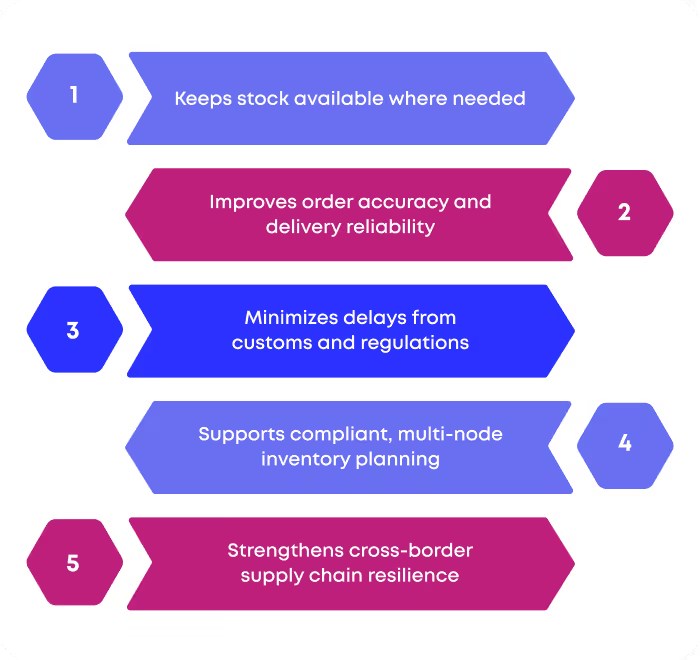
Global fulfillment accuracy is exponentially more complex than domestic fulfillment due to variations in customs, taxes, shipping carriers, demand cycles, and consumer behavior. Predictive analytics helps unify these complexities.
How Predictive Models Improve Cross-Border Accuracy
Predictive systems analyze a wide range of operational and external variables to generate highly accurate forecasts:
- Import/export delays: Historical transit data, port congestion trends, and geopolitical factors help models estimate where and when delays are most likely to occur.
- Customs clearance risk: Algorithms detect patterns related to documentation errors, product classifications, or high-risk categories that often trigger inspections.
- Regional demand patterns: Country-level purchasing behavior and seasonal cycles allow for more precise SKU-level forecasting in each market.
- Currency fluctuations: Monitoring exchange-rate volatility helps predict potential impacts on pricing, margins, and consumer purchasing power.
- Local consumer preferences: Insights into regional product popularity, cultural preferences, and emerging trends improve assortment planning.
- Supplier reliability: Performance data—lead-time consistency, defect rates, production bottlenecks—enables more accurate procurement decisions.
- Country-specific return behaviors: Models track return reasons and frequency by market, identifying patterns that influence net demand.
- Cross-border lead times: Transit histories from different carriers, lanes, and shipping methods help set realistic delivery promises.
- Regulatory changes: Continuous monitoring of trade policies, duties, and compliance requirements reduces the risk of unexpected disruptions.
These insights enable fulfillment operators to make more informed, data-backed decisions about key operational areas:
- Where to stock inventory: Predicting demand allows inventory to be positioned closer to high-volume regions to reduce shipping costs and transit time.
- How much inventory to allocate per region: Each market receives stock proportional to expected demand and volatility, improving availability and reducing excess.
- Which products require localized safety stock: High-velocity or high-uncertainty items can be buffered strategically to prevent stockouts during peaks.
- Which customs routes have higher delay probabilities: Operators can prioritize faster or more reliable lanes to protect service levels.
- How to optimize multi-node replenishment schedules: Predictive insights help determine the most efficient sequence for moving stock between hubs, ensuring consistent supply without overloading any single node.
Why It Matters
According to Deloitte, cross-border e-commerce is set to reach $4.8 trillion by 2026, placing greater emphasis on operational accuracy in global trade. Predictive analytics enables this by improving how businesses anticipate demand, plan inventory, and prevent stock shortages across regions. It strengthens order accuracy by identifying recurring fulfillment issues early and supporting more consistent, error-free processing.
Predictive models also enhance lead-time reliability by factoring in customs patterns, carrier performance, and historical transit variations. They streamline compliance planning by highlighting potential regulatory or documentation risks before shipments reach the border. During periods of high demand, predictive insights help teams manage overflow more efficiently by reallocating capacity where it’s needed most. Overall, these capabilities build greater supply-chain resilience, allowing companies to respond faster and more effectively to disruptions.
Conclusion: The Future of Accurate Fulfillment Will Be Predictive
Predictive analytics is reshaping global fulfillment from the inside out. As operations become more complex, SKU counts expand, and customers demand faster and more accurate deliveries, fulfillment centers must evolve beyond reactive accuracy checks. The future is one where forecasting drives every operational decision, from inventory placement and slotting to labor planning and returns handling.
While brands can adopt predictive tools independently, the most significant accuracy gains occur when fulfillment partners operate with integrated predictive models built into their infrastructure.
Filuet’s long-standing experience in highly regulated, multi-market, and volume-intensive operations, shown across its published case studies, illustrates how data-backed forecasting, regional understanding, and continuous accuracy improvement play a central role in supporting global brands. While this article is not promotional, real-world observations show that fulfillment companies with deep regional experience and analytical rigor naturally achieve higher accuracy.
As ecommerce continues to expand across borders, predictive analytics will become the backbone of fulfillment accuracy, enabling networks to operate with greater efficiency, stability, and resilience, ensuring brands can meet customer expectations anywhere in the world.

.webp)