.webp)

Introduction: Compliance as a Core Component of Cross-Border Operations
As cross-border e-commerce accelerates, brands expanding into multiple regions face a common operational challenge: navigating the customs, documentation, and product compliance rules of each destination market. While logistics networks continue to become more efficient, regulatory frameworks have grown more detailed, especially for sectors such as nutrition, beauty, wellness, personal care, consumer goods, and electronics.
Markets like India, Kazakhstan, and Cyprus illustrate the diversity in regulatory environments. Each country operates under its own legal, customs, and product safety standards, requiring businesses to approach compliance not as an afterthought but as a foundational operational pillar.
This article provides a structured look at how compliance works in these three regions, how regulations differ, and why understanding them early helps brands avoid delays, penalties, or shipment failures. The focus is purely informational and reflects common regulatory processes that e-commerce and consumer brands must follow when moving products across borders.
1. Understanding India’s Complex but Structured Import Ecosystem
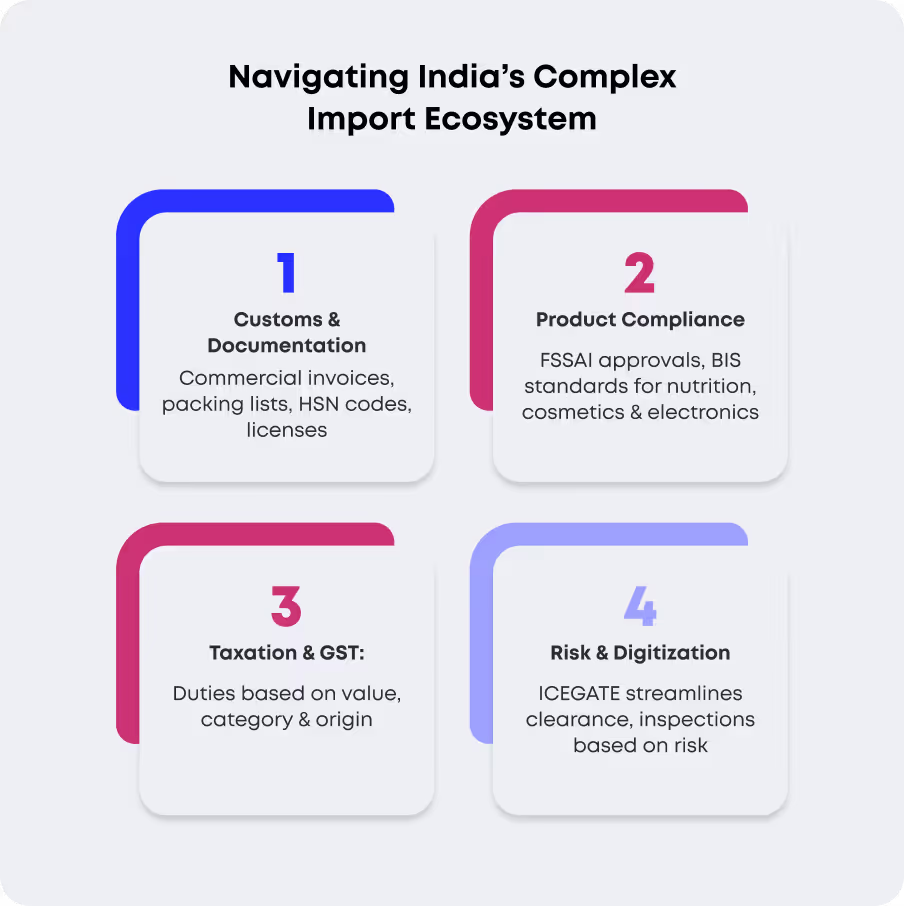
India is one of the fastest-growing e-commerce markets in Asia, but it also has one of the most detailed compliance ecosystems. The country operates through a combination of customs rules, product regulations, taxation laws, and licensing requirements that vary by product category.
Customs Documentation and Import Processes
Imports into India require properly filed documentation including commercial invoices, packing lists, HSN codes, and applicable licenses depending on product type. Customs officials evaluate documentation accuracy, declared values, and classification codes to ensure that all goods comply with the country’s import rules. Misclassification or incomplete paperwork is one of the most common causes of delays.
India’s customs system operates on a risk-based model, where shipments may be flagged for inspection based on value, product category, or type of importer. Digitization through systems such as ICEGATE has accelerated the clearance cycle, making the process far more transparent compared to earlier years.
Product Compliance for Nutrition, Cosmetics & Consumer Goods
Product categories such as nutritional supplements, cosmetics, and food items fall under the jurisdiction of the Food Safety and Standards Authority of India (FSSAI). Imports may require:
- FSSAI approvals
- Proper labeling
- Batch test reports
- Ingredient declarations
Cosmetics must adhere to India’s Bureau of Indian Standards (BIS) guidelines for permitted substances and labeling requirements.
For electronics and specific product types, BIS certification may be required before goods are allowed for commercial sale. This ensures safety, performance standards, and consumer protection.
Taxation and GST Requirements
India uses the Goods and Services Tax (GST) system, which applies to most imported goods. Duties are assessed based on product value, category, and origin. E-commerce fulfilment operations must account for these taxes when pricing and planning their inventory.
Why It Matters
India’s regulatory system is structured but detailed. Brands must prepare accurate documentation, ensure correct product classification, and comply with product regulations to avoid delays or penalties. Understanding these requirements early allows companies to streamline their imports, maintain consistent inventory cycles, and prevent disruptions in market entry or ongoing distribution.

- Commercial invoice
- Packing list
- HSN classification
- FSSAI/BIS licenses if applicable
- Test reports / product approvals
- Invoice
- HS code
- Certificate of origin
- TR CU certificate
- Packing list
- Invoice
- Commodity code (TARIC)
- CE compliance docs
- SDS (for relevant products)
2. Kazakhstan’s Evolving Regulatory Landscape

Kazakhstan occupies a unique position as a growing market connected to both Central Asia and Eurasian trade routes. Its regulatory system shares similarities with countries in the Eurasian Economic Union (EAEU), providing a standardized framework across several product categories.
Customs Clearance and Documentation Standards
Imports into Kazakhstan require documentation such as commercial invoices, HS codes, certificates of origin (if applicable), packing lists, and product certificates. Customs duties depend on both the type of product and its classification under EAEU regulations.
Kazakhstan’s customs system has modernized significantly over the last decade, incorporating digital processing to improve transparency and reduce clearance times. While inspections remain common for certain categories, predictable workflows allow companies to plan inventory and replenishment more accurately.
EAEU Technical Regulations (TR CU)
Because Kazakhstan follows EAEU standards, product categories such as electronics, cosmetics, personal care items, and nutritional products must meet specific technical regulations known as TR CU certificates.
These certificates validate product safety, labeling, ingredient standards, and usage guidelines. For example:
- Cosmetics must comply with TR CU 009/2011
- Low-voltage equipment follows TR CU 004/2011
- Nutritional supplements and food products must meet TR CU 021/2011
Products without proper certification may be held at customs, returned to origin, or prohibited from commercial distribution.
Labeling Requirements
Kazakhstan requires labeling in accordance with EAEU standards, which often include:
- Ingredients
- Shelf life
- Storage conditions
- Manufacturer details
- Country of origin
Labels must be accurate and placed on each product unit or packaging before commercial sale.
Why It Matters
Kazakhstan’s integration with EAEU standards offers predictability, but also demands strict adherence to technical regulations. Companies that understand these frameworks avoid clearance delays, ensure legal distribution, and maintain product integrity. This creates smoother entry into a region with increasing demand for cross-border e-commerce.
3. Cyprus’ Compliance Environment for Cross-Border Commerce
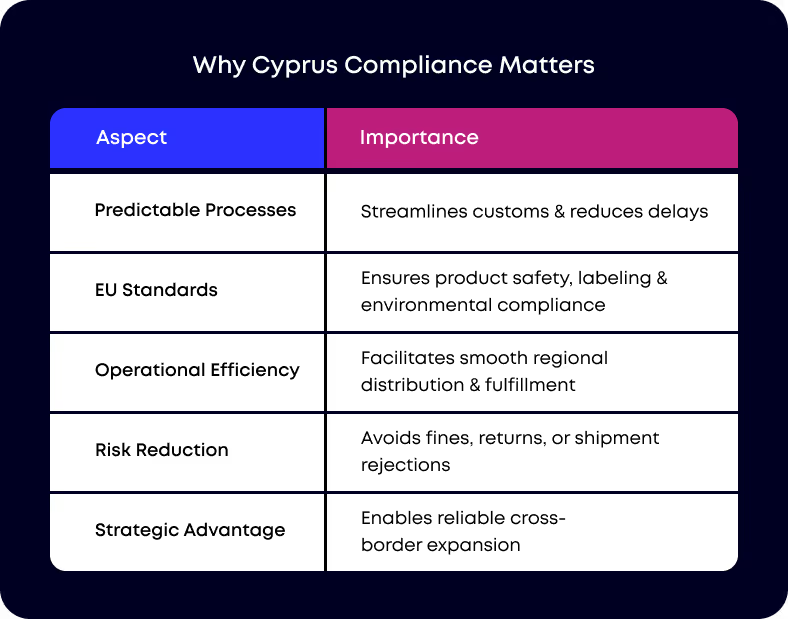
Cyprus is recognized for its stable regulatory environment and efficient import processes. Although not a large market, it plays a practical role as a regional logistics node due to its structured customs rules and alignment with European Union standards.
Customs Processes and EU Compliance
Being part of the EU Customs Union, Cyprus applies standardized customs procedures consistent with EU legislation. This includes documentation requirements such as commercial invoices, packing lists, commodity codes, and safety data sheets where relevant.
The EU’s TARIC database governs duty rates, product classifications, and import restrictions. Goods entering Cyprus undergo customs clearance that is generally efficient due to digitized systems, predictable workflows, and transparent requirements.
Product Safety Frameworks (EU Directives & Regulations)
Consumer-facing product categories must meet EU-wide standards such as:
- Cosmetics Regulation (EC) No 1223/2009
- Food Supplement Directive 2002/46/EC
- General Product Safety Directive (GPSD)
- CE Marking requirements for electronics
These frameworks ensure that imported goods meet safety, labeling, and environmental standards. Cyprus mirrors these EU rules without additional layers of local complexity.
Labeling and Packaging Rules
For most product categories, Cyprus requires labeling that complies with EU standards, which include clear ingredient lists, allergen disclosures, safety warnings, and manufacturer details. Goods sold in Cyprus or distributed through its fulfillment hubs must comply fully with these requirements before reaching end markets.
Why It Matters
Cyprus provides a predictable, structured compliance environment aligned with EU regulations. For global brands, this reduces ambiguity and makes it easier to plan long-term distribution strategies. Consistent rules allow for operational efficiency, particularly when Cyprus is used as a regional fulfillment hub serving surrounding markets.
4. Comparing the Three Markets: What Makes Compliance Complex?
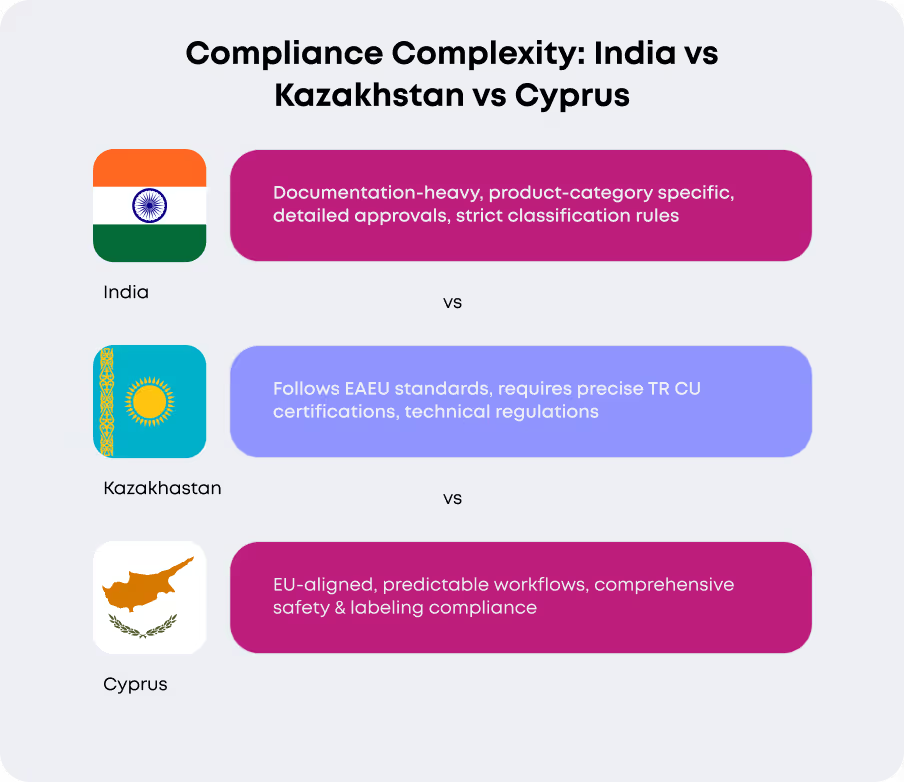
Although India, Kazakhstan, and Cyprus each offer stable regulatory environments, brands face different types of complexity in each region.
India is documentation-heavy and product-category specific, requiring detailed approvals and strict adherence to classification rules. Kazakhstan follows EAEU-wide regulations, which offer unified standards but call for precise certification under technical regulations. Cyprus aligns with EU standards, providing a predictable pathway but requiring comprehensive compliance for product safety and labeling.
These differences highlight why brands cannot copy-paste compliance strategies across countries. Instead, operational planning must account for:
- classification rules
- paperwork and documentation
- inspection likelihood
- product category regulations
- labeling requirements
- safety testing or certification
Why It Matters
Understanding these variations early allows companies to build scalable expansion plans. Rather than reacting to delays or regulatory obstacles, businesses can proactively structure SKUs, documentation formats, and import workflows to align with local requirements. This increases reliability, reduces risk, and improves overall efficiency in cross-border execution.
5. The Role of Fulfillment Partners and Local Expertise
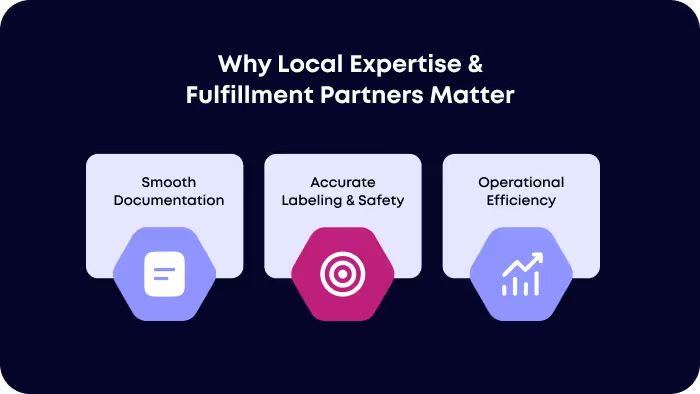
Compliance is not only a government-driven process—it also depends heavily on how businesses prepare, communicate, and maintain accurate product data. Local knowledge plays a crucial role in ensuring that the right documents accompany every shipment, certifications are updated, and products meet labeling and safety standards.
Partners operating in India, Kazakhstan, and Cyprus often help brands manage:
- customs documentation preparation
- regulatory classification
- labeling and packaging verification
- adherence to product safety frameworks
- interpretation of technical regulations
- coordination with customs authorities
Such collaboration ensures that compliance becomes a seamless part of inbound receiving, storage, and outbound distribution workflows.
Why It Matters
Local expertise reduces the risk of rejections, fines, or rework. When compliance is integrated into fulfillment operations, companies experience more predictable lead times, minimize stockouts, and maintain smoother supply chain flow across all three markets.
Test Your Compliance Knowledge: What Would You Do?
Conclusion: Turning Compliance into a Competitive Advantage
Compliance in India, Kazakhstan, and Cyprus is not merely a checklist—it is an operational discipline that influences speed, accuracy, and long-term success. Although each country has its own regulatory framework, common themes emerge: clarity in documentation, adherence to safety and labeling standards, and proper product classification.
Filuet’s experience operating fulfillment hubs in these regions demonstrates how structured compliance workflows support reliable multi-market expansion. With standardized processes, clear documentation practices, and adherence to local regulations, brands can enter new markets with confidence and maintain consistency in their global supply chain operations.
As cross-border e-commerce continues to scale, companies that treat compliance as a strategic priority will gain a significant advantage—not only in avoiding delays, but in building resilient, predictable, and high-performing international logistics networks.